Fire Fighting and Safety Essentials: A Surveyor’s View
Understanding American Boat and Yacht Council (ABYC) A-4:
For marine surveyors, few responsibilities are as critical as evaluating onboard safety systems—especially those designed to prevent and combat fire. Among the many standards published by the American Boat and Yacht Council (ABYC), A-4: Fire Fighting Equipment stands out as a cornerstone guideline for ensuring vessels are properly equipped to handle fire emergencies.
This post breaks down the essentials of ABYC A-4, offering practical insights to help surveyors conduct thorough and compliant inspections.
Why ABYC A-4 Matters
Fires onboard vessels escalate rapidly, often leaving little margin for error. ABYC A-4 establishes minimum requirements for fire extinguishing equipment on boats, focusing on accessibility, suitability, and maintenance. For surveyors, understanding this standard is key to identifying deficiencies that could endanger lives and property.
Key Components of ABYC A-4
1. Fire Extinguisher Types and Ratings
ABYC A-4 specifies that extinguishers must be appropriate for the types of fires likely to occur onboard:
Class A: Ordinary combustibles (wood, fabric)
Class B: Flammable liquids (fuel, oil)
Class C: Electrical fires
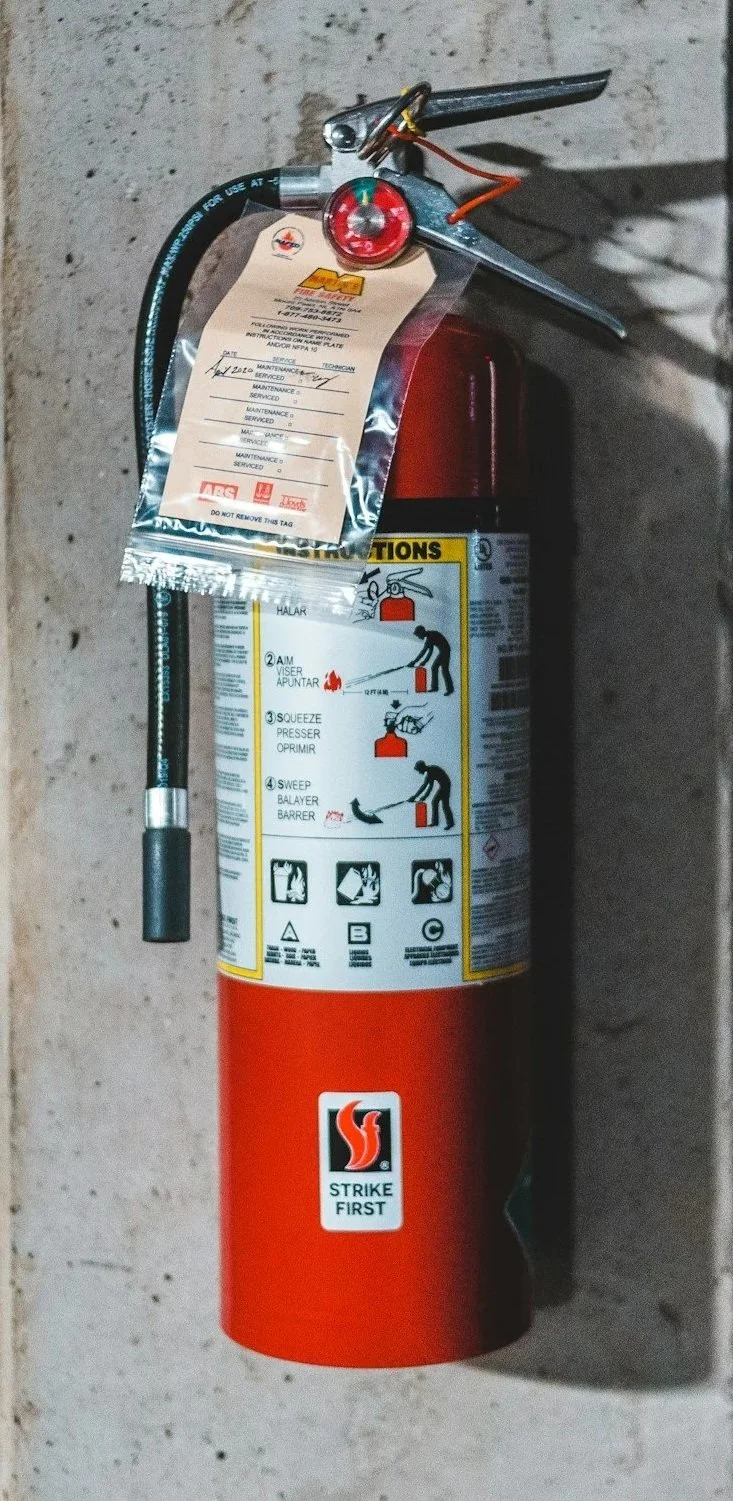
Most marine extinguishers are rated for multiple classes (e.g., ABC), and surveyors should verify that installed units meet the required ratings for the vessel’s size and configuration.
2. Quantity and Placement
The number of extinguishers required depends on the vessel’s length and layout. A-4 emphasizes:
Strategic placement near high-risk areas (engine compartments, galleys)
Readily accessible locations (not locked away or obstructed)
Proper mounting brackets to prevent movement in rough seas
Surveyors should ensure that extinguishers are visible, reachable, and securely installed.
3. Inspection and Maintenance
Even the best equipment is useless if it doesn’t function when needed. ABYC A-4 requires:
Regular inspection for pressure, corrosion, and damage
Verification of service dates and certification tags
Replacement of expired or discharged units
Surveyors should document any signs of neglect or non-compliance.
4. Fixed Fire Suppression Systems
For vessels with enclosed engine compartments, fixed fire suppression systems may be required. These systems:
Automatically detect and extinguish fires
Often use clean agents like FM-200 or CO₂
Require proper installation and periodic servicing
Surveyors should confirm system certification and check for tampering or overdue maintenance.
Common Deficiencies Found During Surveys
Missing or insufficient number of extinguishers
Expired inspection tags or low pressure
Improper mounting or inaccessible placement
Mismatched fire ratings for onboard risks
Disabled or uncertified fixed suppression systems
Identifying these issues early can prevent catastrophic outcomes.